

Request a scope assessment or call 1800 328 982.
Regular and deep NDIS cleaning describe different scope layers. Regular cleaning is a repeatable set of ordinary indoor tasks intended to maintain priority rooms. Deep cleaning is an expanded, condition-dependent request that needs assessment before anyone assumes its tasks, time or safety controls. The terms are not NDIS funding categories, fixed packages or promises of availability.
Quick comparison
Regular cleaning is usually framed around
- a stable list of ordinary indoor cleaning tasks
- priority rooms that can be maintained at an agreed interval
- repeatable access, product and surface instructions
- a realistic quantity for each booked visit
- review when needs, conditions or the plan change
Deep cleaning is usually framed around
- a more detailed description of current room conditions
- expanded tasks that are not assumed inside the routine scope
- extra assessment of time, equipment, surfaces and safety
- a written list of accepted and declined tasks before booking
- possible staging or a revised priority order
Neither list decides funding. It only helps turn a vague label into a quote-ready scope.
Regular cleaning maintains an agreed routine
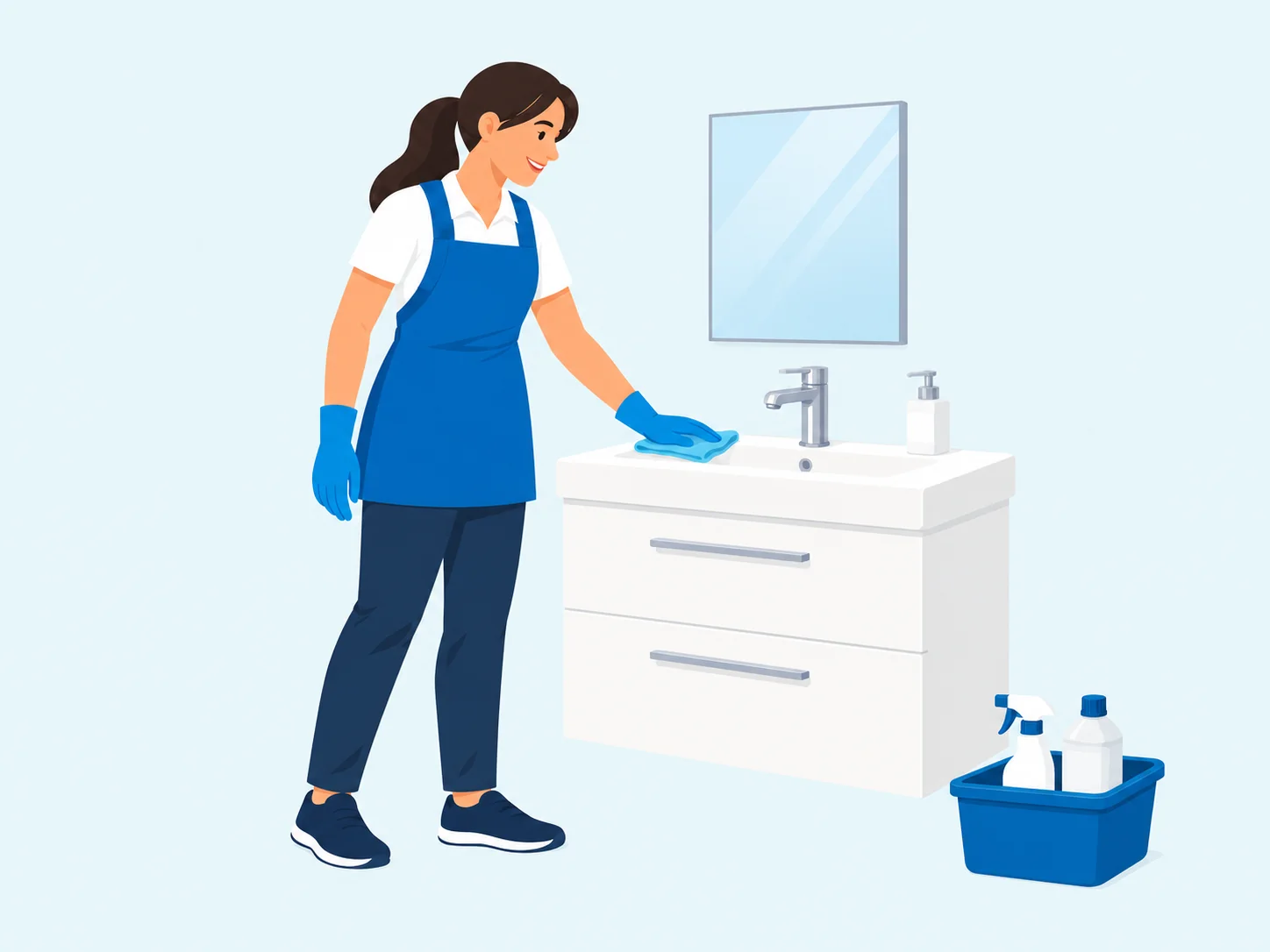
A regular scope should be possible to describe consistently: selected floors, bathroom surfaces, toilets, kitchen surfaces, dusting or other agreed ordinary indoor tasks. The actual list depends on the participant and address. Essential work should come first, with optional items identified separately so a visit does not become an unbounded promise.
The national NDIS indoor cleaning guide explains the general service. Use this comparison to decide whether you need a regular task list or a separate assessment for more detailed work.
Deep cleaning is not a fixed checklist
The word deep can mean different things to different households. Do not infer appliance interiors, cupboards, internal windows, detailed edges, heavy build-up, stain removal or movement of belongings from the label alone. Each requested task should be named, assessed and accepted in writing. Some requests may be unsuitable, outside service scope or require another specialist.
The deep NDIS cleaning page explains that assessment boundary. The requested tasks, safe access, price and appointment need written agreement before a booking is confirmed.
Use condition notes without making diagnoses
Record observable facts: which room, which surface, the type and extent of build-up, access limitations, fragile items, pets, ventilation and any known product restriction. Photographs should only be requested or shared when necessary, authorised and handled appropriately. Do not use a cleaning enquiry to diagnose disability, health conditions or the cause of the home’s condition.
If there is mould, a suspected biohazard, sharps, pest activity, structural damage or another specialist risk, stop and identify the right qualified service. Those matters are outside ordinary indoor household cleaning and should not be disguised as deep cleaning.
Compare task intensity, not just room count
Two homes with the same number of rooms can require very different work. Compare surface area, condition, accessibility, the number of detailed tasks and whether items must remain untouched. A regular clean can involve several rooms but a stable light task list; one deep-clean request can focus on a smaller area yet require more assessment and time.
Prepare a room-by-room list with the task-list guide. Mark each item routine, expanded, excluded or unclear. This gives the provider enough information to say what it can actually assess.
Do not use a deep clean to hide an unrealistic routine
If priority work repeatedly builds up between ordinary visits, review the regular task order, visit quantity and frequency. Adding occasional expanded work may not solve a recurring mismatch. Conversely, a larger first assessment may be needed before a smaller routine is workable. Ask for the initial and maintenance scopes to be described separately.
No pattern should depend on unsafe work by the participant or on unpaid work by another person. A review may change priorities, visit length or frequency, but it does not guarantee funding.
Compare quote details side by side
For each option, ask for:
- the named rooms and accepted tasks
- the priority order and expected stopping point
- the proposed quantity and price basis
- products, equipment and access responsibilities
- assessment-only and excluded work
- the process for changes, cancellations and review
The cleaning quote guide helps check the written response. A deep-clean estimate should not be treated as a routine recurring price unless that is expressly agreed.
Keep both options inside the household-cleaning boundary
Regular and deep labels do not bring gardening, yards, exteriors, maintenance, repairs, personal care, transport, meal preparation, separate decluttering services, clinical work, mould or biohazard remediation, or pest treatment into scope. Ask about a different support or qualified specialist when the task belongs elsewhere. Laundry, linen, dishes, tidying, organising and incidental handling of household items may be agreed when safe and consistent with approved support arrangements. Confirm the tasks, permissions, time and price before booking; a task appearing in a guide or quote does not establish funding approval.
Use the scope worksheet to make these boundaries visible before requesting a quote. A written exclusion protects the participant from assuming work will occur and protects the provider from an open-ended request.
Separate the service label from funding
The NDIA explains that core supports can help with everyday activities and that each participant uses them differently. Read the current core supports guidance, NDIS supports guidance and the participant’s plan. A provider can describe a cleaning scope but cannot make the NDIA’s reasonable and necessary decision.
The official reasonable and necessary guidance should be checked when considering amount and frequency. The words regular and deep do not create separate funding entitlements.
Choose the next assessment question
- Can the needed work be described as a stable ordinary task list?
- Are there condition-dependent or detailed tasks outside that routine?
- Does any task require specialist handling rather than household cleaning?
- Would a separately assessed first scope make a later routine workable?
- Have priorities, access and do-not-touch instructions been written down?
- Has the participant checked the plan and relevant funding pathway?
Request written confirmation for the address
Send the exact address, room list, observable condition notes, priority tasks, access details and preferred timing. Ask which items fit a regular scope and which require a separate deep-clean assessment. Do not send sensitive information that is unnecessary for quoting.
Email info@smurfettescleaningservice.net or use the contact form. Smurfettes must assess task fit, safety, current capacity and payment arrangements, then confirm any accepted work in writing. An enquiry does not reserve a cleaner or establish NDIS funding.