

If you need help keeping your bathroom clean, tell Smurfettes which surfaces you want cleaned, what should be left alone and how the cleaner can safely enter and work in your home. We can discuss a written quote for the agreed household tasks. An enquiry does not confirm an appointment or NDIS funding.
Tell us what needs cleaning
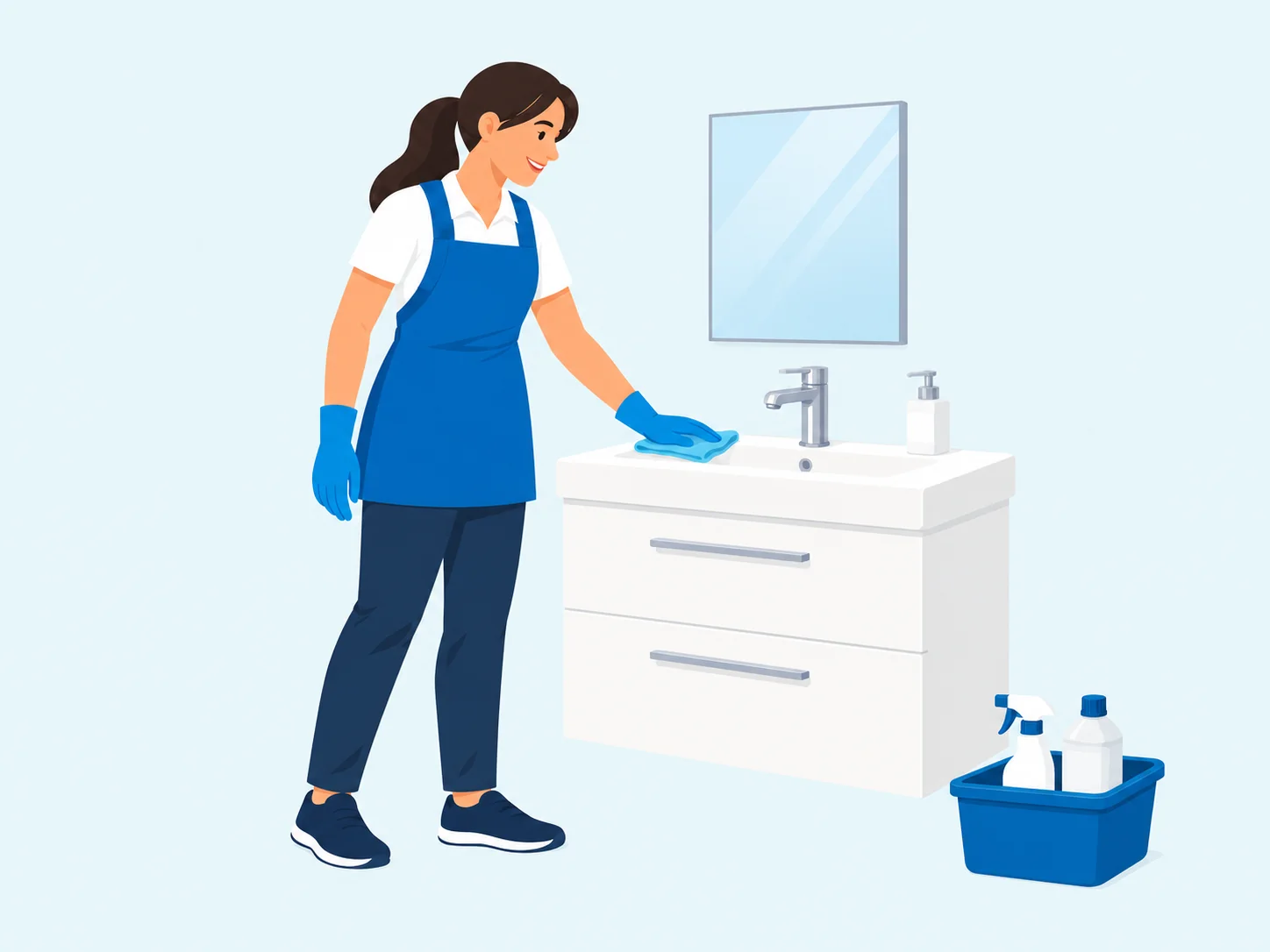
You can describe the bathroom in four areas. You do not need a formal assessment or a detailed drawing; a short list is enough.
- Shower and bath: Tell us whether to clean the shower, bath, screen, taps or nearby tiles, and what to leave untouched.
- Toilet and basin: Name the toilet, basin, vanity top or contact points to include, and whether personal items can be moved.
- Floor and other reachable surfaces: Name the floor, mirror, door, handles or accessible ledges to clean. Tell us about access, slip risks and surface-care instructions.
- Private storage and belongings: Cupboards, drawers, medicines, toiletries and mobility-related items should usually be left alone unless a particular task and handling permission are agreed.
For each item, say whether to clean it as an agreed household task, leave it untouched, ask the nominated contact before deciding, or stop and report a hazard or specialist issue. Tell us about mould, sewage, sharps, pests, unsafe damage or electrical concerns before treating any affected area as routine cleaning. Repairs, restoration, pest work, biohazard cleaning and other specialist treatment are not included by using a regular-cleaning label.
Protect privacy and agree who can give instructions
Tell us the exact address, which bathroom needs cleaning, relevant stairs, lifts, parking or building entry, and who can let the cleaner in. If the participant needs a particular way to communicate, time to respond, a support person or a quiet approach, explain the practical instruction. A detailed medical history is not needed for a cleaning enquiry.
Bathroom cleaning is not personal care. The quote should not imply help with bathing, toileting, medication or transfers. Cleaning ordinary surfaces is also different from handling or maintaining mobility or medical equipment; any equipment-related task needs its own authorised instructions and agreement.
If the bathroom is shared, identify the participant’s requested cleaning, common surfaces, other people’s belongings and any areas to leave alone. A participant’s plan does not automatically authorise handling a housemate’s property or taking over staff, housing-provider or repair duties. Name one person who can approve changes and how best to reach them. If instructions conflict, leave the disputed item untouched until the authorised people agree. Share only the personal information needed for access and the cleaning.
Check products and safe access
Mention fragrance or product preferences, surfaces needing special care and ventilation needs. A product or method cannot be assumed safe for every person or finish. If instructions or a product label conflict with the proposed work, pause that task and ask. Tell us about blocked access, damaged surfaces or water that cannot be safely contained so the affected task can be discussed before work continues.
Choose the visits and check NDIS funding
Tell us whether you want recurring household cleaning or help with a particular visit, which tasks matter most and whether they may need repeating. A different condition, method or specialist request may need a separate discussion and quote. Read the NDIS household-cleaning guide for general household support, the carpet-cleaning guide for a separate carpet request, or household cleaning services and areas for other services and locations. These guides do not confirm funding or an appointment at your address.
Bathroom cleaning is not automatically NDIS-funded. The participant or authorised funding contact should check whether the proposed household tasks relate to the participant’s disability support needs, fit the plan and current NDIS rules, and can be paid under their management arrangement. A page, quote or invoice cannot decide that.
Smurfettes Service Pty Ltd is registered for NDIS Household Tasks. NDIA-managed supports require a registered provider, and any my provider steps should be checked. Plan-managed and self-managed arrangements have different provider and payment requirements. Registration does not approve an individual bathroom task for a participant’s plan.
Review the quote and any changes
Ask for a written quote showing the exact address, areas and tasks to clean, surfaces and belongings to leave alone, product and access instructions, visit pattern, price basis, exclusions and who can approve a change. Optional tasks should be listed separately, not assumed. Check that agreed cleaning is included, leave-alone and stop instructions remain clear, and questions are resolved before accepting. If a task, method, time or price changes, ask the authorised contact to approve it in writing first. Keep the accepted quote, agreed changes, service record and invoice together; check that the invoice matches the work actually done.
Ask about bathroom cleaning
Have the exact address, priority surfaces, leave-alone instructions, access details, communication needs, product restrictions, preferred visit pattern, funding-management arrangement and change contact ready. Call 1300 525 336 or email info@smurfettescleaningservice.net to discuss a written quote. A response does not confirm cleaner availability, an appointment, NDIS payment or completion of every requested task.