

Ask about indoor household cleaning or call 1800 328 982.
Household cleaning is one task family among many supports a participant may consider. It does not automatically include laundry, personal care, meal preparation, transport, yard work, home maintenance, plan management, support coordination or clinical services. Separating the task family first makes it easier to find a suitable provider, prepare an accurate quote and check the participant’s plan. Use this guide to separate cleaning from other help; it does not decide funding.
What belongs in an indoor cleaning request
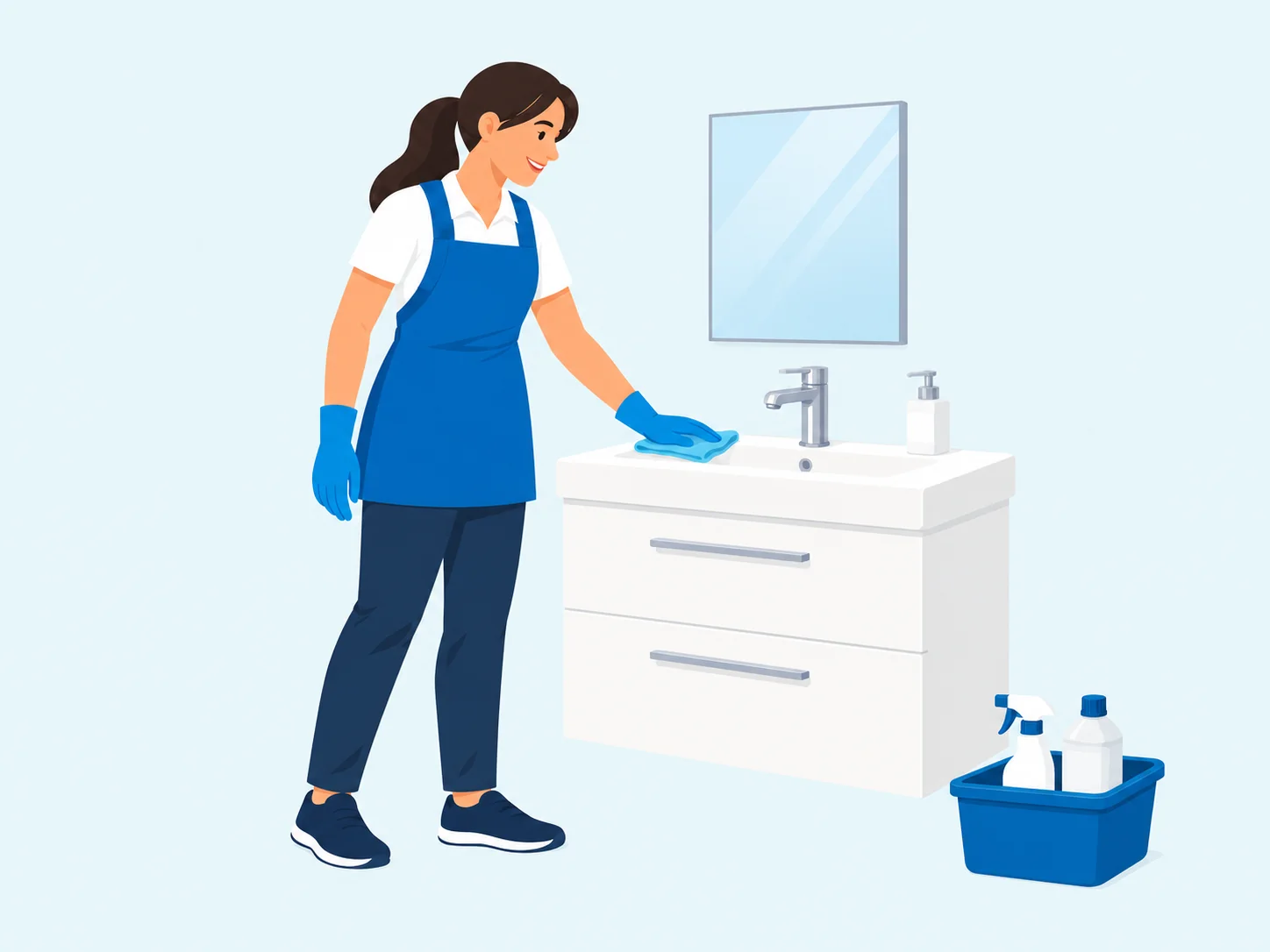
Start with agreed rooms and surfaces. A cleaning request may describe selected floors, reachable dusting, bathroom and toilet surfaces, and kitchen surface cleaning within a written priority order. The actual accepted list depends on the address, condition, time, access, safety and provider assessment.
The national NDIS indoor cleaning guide explains Smurfettes’ general cleaning scope. The comparisons below help you identify which requests are household cleaning and which need a different type of support.
Cleaning versus personal care
Cleaning a bathroom surface is different from assisting a person to bathe, dress, toilet or manage hygiene. Personal care involves direct assistance to the participant and may require different workers, competencies, risk controls and agreements. Do not hide personal care inside wording such as bathroom help or help getting ready.
If both are needed, make separate lists and identify a suitable provider for each. An indoor cleaner should not be expected to deliver personal support merely because the tasks occur in the same room.
Cleaning versus meals, dishes and household organisation
Planning meals, shopping and cooking are separate from household cleaning. Dishes, tidying, organising and incidental handling of household items may be included when agreed and safe. Record the requested tasks and handling permissions; separate decluttering services and decisions about what to discard require their own arrangements.
Keep do-not-touch areas and movement permissions explicit. If a surface is blocked, agree whether the household will prepare it or whether safe incidental handling will be included in the written task list. Do not assume permission to sort possessions, move heavy items or discard anything.
Cleaning versus laundry assistance
Laundry follows clothes and linen through agreed handling steps. Cleaning follows rooms and surfaces. Machine use, garment instructions, drying, folding and storage are not implied by a cleaning booking. The cleaning versus laundry comparison explains this boundary in detail.
For a Smurfettes enquiry, list any laundry and linen handling you want considered alongside the room-cleaning tasks. These may be included when agreed, safe and consistent with approved support arrangements. Confirm the handling steps, time and price in writing; a cleaning booking does not add them automatically or approve NDIS funding.
Cleaning versus yard work and home maintenance
Gardening, mowing, pruning, rubbish removal from yards, gutters and exterior washing are not indoor household cleaning. Repairs, installations, electrical or plumbing work, painting, structural work and appliance maintenance also belong outside a cleaning scope. A cleaner should not be asked to improvise a maintenance task.
When a task involves damage, specialist tools, a trade, working at height or the exterior of the property, identify a suitable qualified provider. The fact that a task affects the home does not make it household cleaning.
Cleaning versus transport and community support
Driving a participant, accompanying them in the community, shopping with them or arranging transport are not indoor cleaning tasks. Travel associated with a provider attending a cleaning service is also a pricing and agreement question, not participant transport. Describe each need separately so records and invoices do not merge different supports.
A cleaning provider’s arrival at the address should not be treated as agreement to drive, run errands or collect household goods. Any separate support requires its own provider fit and written terms.
Cleaning versus plan administration and coordination
A cleaner can provide a quote, service record and invoice for accepted work. That does not make the cleaner a plan manager, support coordinator or funding decision-maker. Plan managers handle payments and financial administration for plan-managed budgets. Support coordination is a different support that helps participants understand and use their plan and connect with services.
Ask the authorised contact who can approve scope changes and who receives invoices, but do not ask a cleaning provider to interpret the entire plan or promise that a claim will succeed.
Cleaning versus clinical or specialist remediation
Clinical cleaning, infection-control services, mould remediation, biohazard response, sharps handling and pest treatment are not ordinary household cleaning. These matters can require specialist assessment, equipment, licensing or safety controls. Stop the ordinary quote process when such a risk is identified.
Describe observable facts without diagnosing a condition or cause. Do not send unnecessary health information or images. A suitable specialist can decide what assessment is required.
Split mixed requests into separate records
When one enquiry contains several task families, create a list for each. Identify the purpose, provider, quantity, price basis, agreement and invoice route independently. This prevents an indoor cleaning quote from appearing to cover work the provider never assessed.
Use the cleaning task-list guide for the cleaning portion. Keep other needs in a separate referral or planning list rather than placing them under optional cleaning tasks.
Do not confuse service categories with funding approval
The NDIA says core supports can help with everyday activities and that every participant uses them differently. Read the current core supports guidance. The participant still needs to check whether the proposed purchase is disability-related, in line with the plan and an NDIS support.
The NDIS cleaning funding guide and the official NDIS supports guidance help with that separate question. Ordinary products and household goods should not be confused with provider labour. The official non-supports list must also be checked.
Use support-item information carefully
A support-item name or code helps describe a payment record; it does not expand the provider’s service, prove that a task was delivered or create funding. The house-cleaning support-item guide explains the catalogue entry. Check the current official catalogue and your funding arrangements before using an item code.
The NDIA makes reasonable and necessary decisions for the individual participant. The official guidance is the source for that decision framework, not a service comparison page.
Decide which kind of help to request
- Does the task involve an indoor room or surface?
- Does it require direct assistance to the participant?
- Does it involve food, dishes, clothes, linen or possessions?
- Does it occur outdoors or require maintenance or a trade?
- Does it involve transport, administration, coordination or clinical work?
- Has a suitable provider accepted that exact task family?
- Has the participant checked the current plan and official rules?
The NDIA’s provider-choice guidance can help with the next provider check.
Request only the indoor cleaning assessment
Send Smurfettes the exact address, indoor rooms, cleaning tasks, priority order, access notes, surface or product restrictions and proposed frequency. Tell us which tasks are outside your cleaning request. Smurfettes must assess task fit, safety and current capacity.
Email info@smurfettescleaningservice.net or use the contact form. Scope and payment arrangements require written confirmation. An enquiry does not reserve a cleaner, add another support family or establish that NDIS funding can be used.